
Recycle Regatta: Students Fighting Ocean Plastic Waste
Building Stewardship: How Recycled Boats Make a Difference for Our Planet
The Recycle Regatta isn’t just about building boats, it’s about building a better understanding of our impact on the planet.
Hosted by New England Science & Sailing (NESS), Educational Passages, and the North American Marine Environment Protection Association (NAMEPA) this national challenge brings together students from across the country to tackle one of the most pressing environmental issues of our time. Each year, participants gather recycled materials, brainstorm designs, and set sail with their homemade boats. But beyond the excitement of racing, they’re learning about a deeper, more urgent issue: our planet’s growing plastic problem.
Why Recycling—and Awareness—Matters
Every time plastic enters our ocean, it threatens marine life and disrupts entire ecosystems. Scientists estimate that by 2050, there could be more plastic than fish in the sea if we don’t shift our habits. Plastic doesn’t just vanish—it breaks down into harmful microplastics that enter the food chain, harming wildlife and even human health.
Here are just a few eye-opening facts about ocean plastics and waste:
- Microplastics in Seafood: A study published in February 2025 found microplastics in 99% of seafood samples tested, raising concerns about human consumption and health implications.
- Impact on Marine Mammals: In the first half of 2024, plastic pollution was responsible for the injury and death of numerous marine mammals, underscoring the immediate threat to marine life.
- Plastic Production and Recycling Rates: Over 400 million tons of plastic are produced annually, yet only about 9% of this plastic has ever been recycled, leading to substantial waste accumulation.
- Microplastics Detected in Marine Mammals: Microplastics have been found in the fats and lungs of approximately two-thirds of marine mammals examined, indicating widespread contamination.
- Projected Increase in Plastic Pollution: Without significant intervention, the amount of plastic waste entering aquatic ecosystems is projected to triple by 2040, exacerbating environmental challenges.
Through the Recycle Regatta, students learn that what we throw away doesn’t go away — and that small actions, like repurposing plastic for a boat, can spark a bigger mindset shift about sustainability.
Earth Day and Environmental Action
With Earth Day right around the corner, this challenge comes at the perfect time to talk about stewardship and our responsibility to care for the Earth. The Recycle Regatta becomes a powerful teaching tool to help students connect classroom learning with global issues.
By encouraging creative problem-solving that’s rooted in sustainability, the Regatta inspires kids to look beyond the project and adopt greener habits at home and in their communities.
Shaping Lifelong Habits
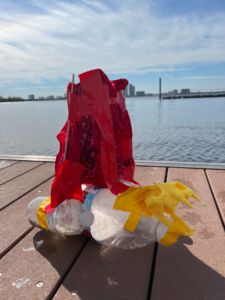
As students learn more about the consequences of pollution and the value of recycling, many begin to make small but meaningful changes in their daily lives. They become more mindful of the materials they use, more likely to recycle, and more inclined to encourage sustainable choices among their peers and families. The Recycle Regatta doesn’t just teach lessons for a day—it helps shape perspectives for the future.
Let’s continue turning awareness into action.
The 2025 Recycle Regatta is open now through April 30, 2025.
Take the challenge. Make a difference.
Click here to learn more and register today!
Together, we can create waves of change—one recycled boat at a time.
Facts and information in this blog were gathered from the following sources:
- Ocean Conservancy – Plastics in the Ocean
- The Guardian – Microplastics Found in 99% of Seafood
- SaveDolphins.EII.org – Marine Mammals Affected by Plastic Pollution
- UNEP – Drowning in Plastics: Marine Litter and Plastic Waste
- Duke University – Microplastics Found in Marine Mammals
- UNEP – Pollution to Solution Interactive Report
