
Celebrating National STEM/STEAM Day 2024
The Power of Sailing in Education with NESS and The Sailing Museum & National Sailing Hall of Fame
National STEM/STEAM Day is a perfect moment to celebrate how experiential learning, hands-on learning, and innovative partnerships are shaping future generations. At New England Science & Sailing (NESS) and The Sailing Museum & National Sailing Hall of Fame, we share a core belief that the sport of sailing is an ideal platform for teaching not only STEM skills but also social and emotional learning (SEL) — both of which are crucial for students' personal and academic success.
Sailing as a Platform for Social and Emotional Learning (SEL)
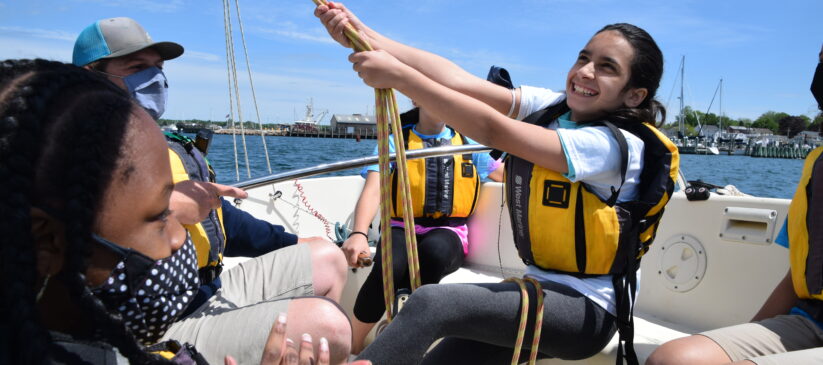
Sailing isn’t just about navigating waters; it’s about learning teamwork, resilience, problem-solving, and confidence. For students, these are essential skills that contribute to SEL, enhancing self-awareness, social responsibility, and decision-making. Both NESS and The Sailing Museum & National Sailing Hall of Fame emphasize that SEL is just as important as academic success. When students are on the water, they’re not only learning physics and math concepts but are also practicing communication, adaptability, perseverance, and leadership skills — qualities that serve them far beyond the classroom.
The Partnership: Bringing Sailing to Life with STEM/STEAM Learning
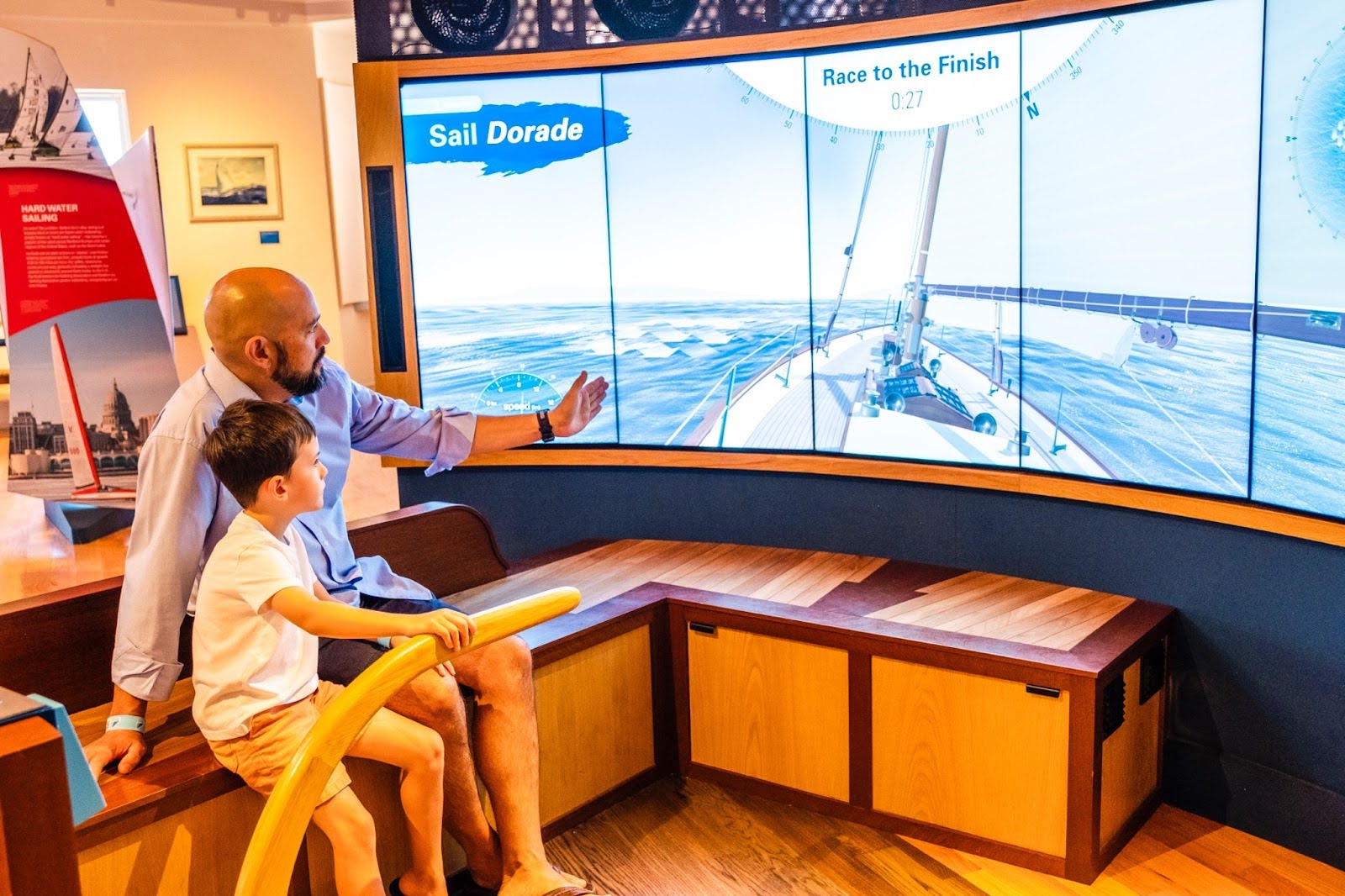
In partnership, NESS and The Sailing Museum & National Sailing Hall of Fame offer an innovative educational journey: ten tailored learning experiences that blend classroom instruction with interactive museum visits.
Here’s how it works:
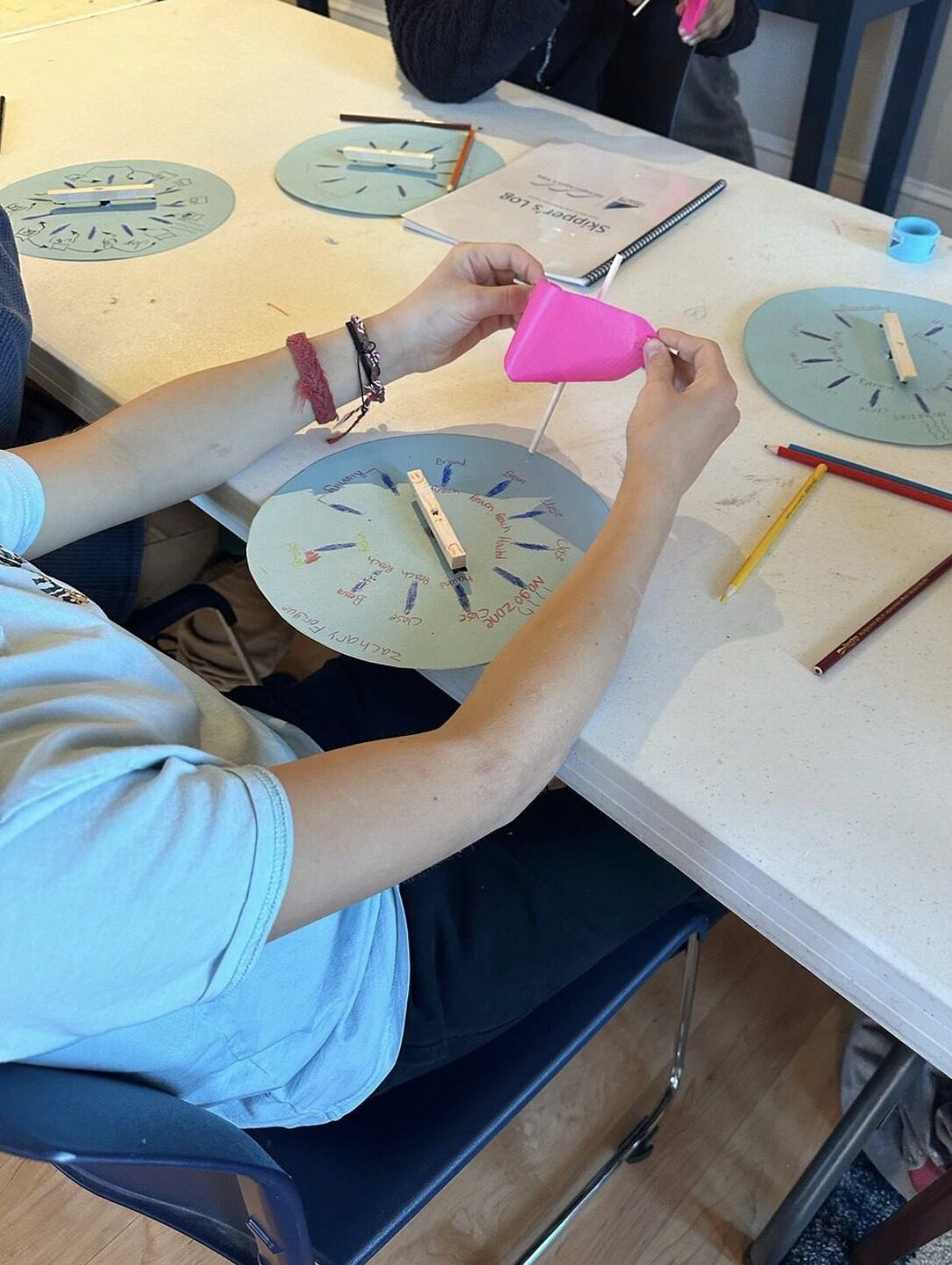
2. Eight In-School NESS STEM Lessons: Delivered between the field trips, these lessons build on what students see in the museum by bringing STEM concepts directly into the classroom. NESS educators lead hands-on activities designed to solidify their understanding of topics such as forces, motion, and the mechanics behind sailing.
STEM in Sailing: The Role of Simple Machines
Sailing offers a rich, hands-on way to explore STEM concepts through practical experience. Hull design, for example, merges art, science, and geometry, with boats ranging from monohulls to multihulls to improve stability. The concept of displacement describes how the weight of water displaced by the hull affects buoyancy.
Sailing also provides a real-world application of aerodynamics. As wind flows across a sail, it generates lift in a way similar to how air moves over an airplane wing, propelling the boat forward. Sailors adjust their sails to optimize lift, allowing them to sail into the wind by carefully balancing speed, direction, and force.
One of the most captivating aspects of sailing for young learners is the science behind it, especially the simple machines that make sailing possible. Whether students are handling a sail or adjusting the tiller, they’re encountering physics in action. Some simple machines that feature prominently in sailing include:
- Levers: The tiller, used to steer, is a lever that allows sailors to control their vessels with minimal effort. Students learn how these mechanical advantages provide greater force and precision to their vessels.
- Pulleys: Sailing involves numerous lines and sails adjusted by pulleys, which reduce the effort needed to lift or move heavy loads. Pulleys also teach students about force distribution and load management.
- Hydraulic/Pneumatic: Hydraulic and pneumatic systems in sailing are used to control essential functions like sail trim, foil adjustments, and rudder positioning by converting fluid or air pressure into mechanical power. These systems allow sailors to make precise, high-force adjustments efficiently, enabling better control and performance, especially on high-tech racing yachts.
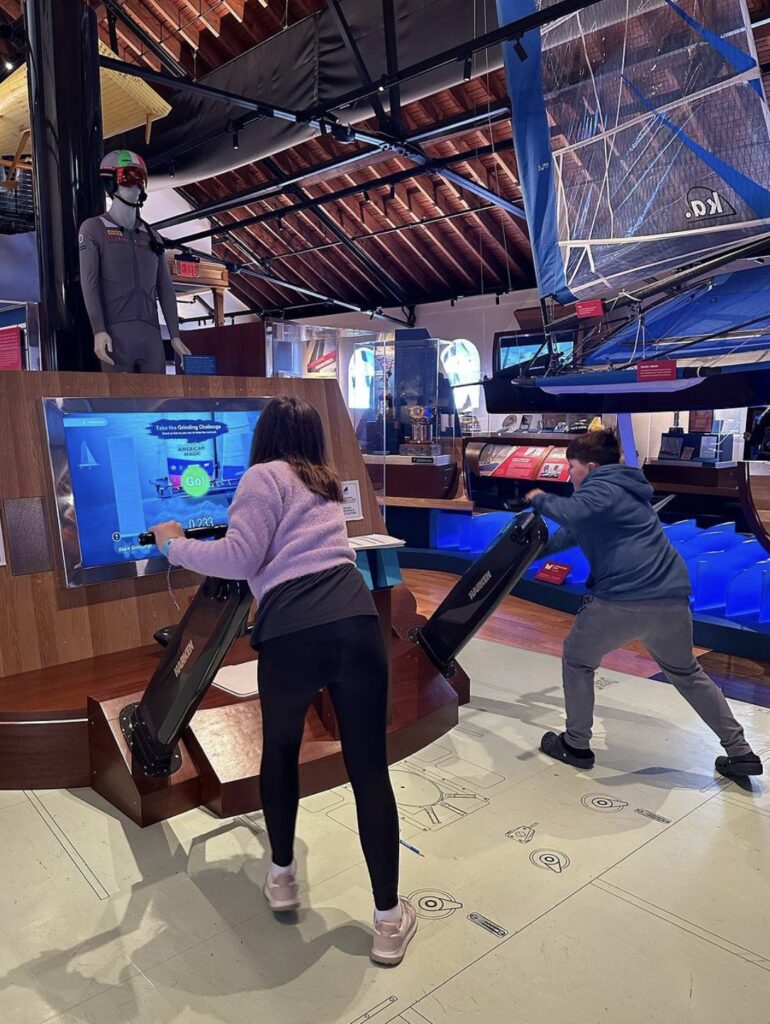
- Winch: A mechanical device used to help sailors control and adjust the tension on lines, such as those used for sails and rigging, by providing mechanical advantage. It allows sailors to handle heavy loads with less effort, making it easier to control sails and improve the vessel's maneuverability.
These mechanical insights serve as a fantastic way to introduce and solidify concepts around energy, force, and motion — the building blocks of STEM understanding. By connecting practical, hands-on experiences to educational objectives, sailing can create new avenues for learning and growth for both sailors and sailing programs.
Beyond STEM: Setting Students on a Path for Success
Through the STEM and SEL components of sailing programs, students develop an enduring appreciation for science and gain confidence in their ability to navigate challenges. National STEM/STEAM Day celebrates precisely this kind of experiential learning that NESS and The Sailing Museum & National Sailing Hall of Fame are proud to provide.
Our brand of ocean education takes outdoor learning one step further. We provide students with an opportunity to get out in the field and experience STEM in the real world. NESS programs enable students with the knowledge and tools to apply STEM in their academic and professional lives through scientific inquiry, problem-based learning, and social-emotional growth.”

Inspiring students to connect with STEM through sailing, whether they're testing buoyancy in a classroom or tacking a sailboat on the water, is at the heart of both organization missions.
About New England Science & Sailing

New England Science & Sailing is a nonprofit, tax-exempt organization that uses sailing, marine science, powerboating, and ocean adventure sports as experiential learning platforms to increase K-12 academic outcomes. NESS educators teach in classrooms and on the water, using over 100 proprietary lesson plans tied to school standards, including the Next Generation Science Standards, Ocean Literacy Principles, and Collaborative for Academic, Social, and Emotional Learning standards. NESS is the only school partner program accredited by the New England Association of Schools and Colleges. Visit nessf.org to learn more.
About The Sailing Museum & National Sailing Hall of Fame

Located in Newport, Rhode Island, The Sailing Museum & National Sailing Hall of Fame is where incredible individuals and inspiring stories from the world of sailing converge. Weaving together history, inspiration, and community the museum champions sailing by preserving America’s rich sailing legacy, celebrating its heroes, and inspiring the next generation. Newport, often referred to as the "sailing capital of the world," has a rich maritime history that dates back to its colonial roots as a busy seaport and includes hosting the America's Cup races from 1930 to 1983.
Learn more about The Sailing Museum & National Sailing Hall of Fame on their website and subscribe to their newsletter to stay in touch with the latest activities.
