
NESS Expeditions: How We Implement Ocean Literacy Principles (OLP)
NESS Expeditions: How We Implement Ocean Literacy Principles (OLP)
“understanding the ocean is essential to comprehending and protecting this planet on which we live”
NESS uses curriculum standards such as the Ocean Literacy Principles to help guide the formation of our lessons. All our programs at NESS reflect the principles set forth by “Ocean Literacy: The Essential Principles of Ocean Sciences K – 12” published in June 2005 by the National Geographic Society, National Oceanic and Atmospheric Administration, Centers for Ocean Sciences Education Excellence, National Marine Educators Association, College of Exploration.
There are seven principles which are all uniquely adapted for grades K-12:
1. The Earth has one big ocean with many features
2. The ocean and life in the ocean shape the features of Earth
3. The ocean is a major influence on weather and climate
4. The ocean made Earth habitable
5. The ocean supports a great diversity of life and ecosystems
6. The ocean and humans are inextricably interconnected
7. The ocean is largely unexplored
The Ocean Literacy Principles work to use the ocean as a teaching tool, just as NESS does! The ocean is so integral to our lives and it is important to cultivate future stewards of our coastlines and seas. The ocean not only covers most of the planet, but regulates the weather and climate, provides us with oxygen, and helps feed much of the global population. Unfortunately, the oceans are threatened in many human-driven ways such as climate change, pollution, and overfishing. Understanding the ocean is important to help make solutions to these problems. One way to build ocean literate students is to engage them in ocean experiences which helps cultivate a personal relationship with the sea and the coast.
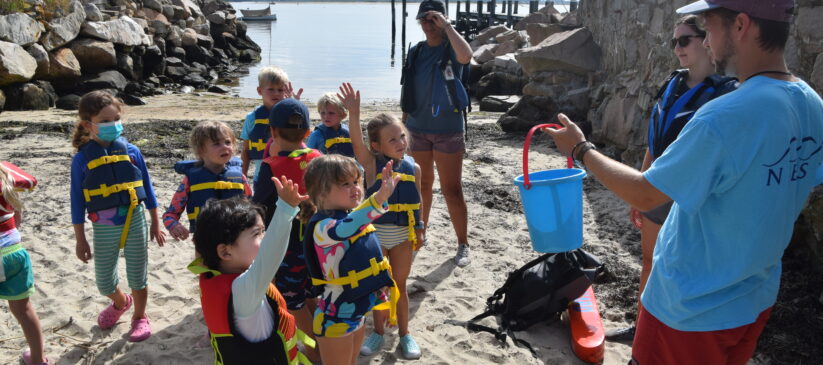
Ocean Literacy Principles are aligned with all NESS programs and all grade levels, ranging from homeschool, summer camp, field trips, and school visits. When our educators are creating lesson plans, connecting each lesson to at least one OLP is a must! For example, our Body Zones lesson teaches 1st grade students about the size of marine animals and how different marine animals move and breathe, specifically comparing whales, squid, and crabs. Our educators found this lesson ties perfectly into the OLP 5: the ocean supports a great diversity of life and ecosystems!
For more information about the Ocean Literacy Principles, visit http://oceanliteracy.wp2.coexploration.org/!
