
NESS Marine Mavens 2021 – 2022

Join us and jump into the on-the-water world!
Our new Marine Mavens skill-building program focuses on getting female-identifying/non-binary middle and high school students ages 12+ experience out on the water and connected to the marine world! Connect with experts in the seafaring and marine science industry through our Speaker Series, and then get on the water yourself! From on-the-water powerboating experience and the opportunity to obtain a Safe Powerboat Handling Certificate, learning the basics of sailing on our Sonar keelboats, to practicing kayaking skills and the opportunity to have a Skills Assessment from the American Canoe Association, there’s so much to get involved in! Join us monthly and jump aboard!
Marine Mavens is a FREE program designed specifically to give female-identifying/non-binary students a look into the marine world. This program is fully funded by the CFECT Women and Girls Fund, the TK Foundation, and the Kate Svitek Memorial Foundation.
According to the United Nation’s 2019 report, women make up only 2% of the 1.2 million seafarers worldwide. A seafarer is a sailor or someone whose occupation involves handling or navigating a ship. Additionally, men in sailing outnumber women, 7 to 1. Through NESS’s new program Marine Mavens, we will introduce students to various aspects of seafaring through hands-on lessons, training, and certifications, as well as a speaker’s series highlighting female-identifying/non-binary professionals in seafaring and marine sciences. We want to provide the necessary skills and empower our students to explore seafaring careers. Seafaring is a male-dominated industry, but at NESS, we want to show students that they have the ability to be a part of this growing and rewarding industry. The program will be taught by female-identifying/non-binary NESS educators and instructors to further empower female-identifying/nonbinary students and to provide mentorship as they navigate through the program.
Here at NESS, our staff breaks down those typical ratios in the sailing and science industries. Women at NESS make up the majority of the staff (68%) and women hold roles at all levels in the organization, from educator to director.
By creating an all-female multi-month program, we hope to cultivate a space that is free of stereotypes, allows for a deepened sense of engagement, grows confidence for all, and strengthens our community.
GOALS
At the conclusion of the program, NESS anticipates that participants will:
– Be able to sail a dinghy and or keelboat with minimal assistance from NESS staff
– Possess an ACA Level 1 skills certification
– Possess a US Powerboating Safe Powerboat Handling certification
– Gain confidence in their on-water abilities
– Create new relationships with other program participants
– Have new professional connections with NESS staff
– Have new professional connections with women in seafaring careers in our community
– Gain confidence, improve teamwork, improve communication skills, and persevere when challenged outside their comfort zones
Upcoming Events
 DR. CINDA P. SCOTT
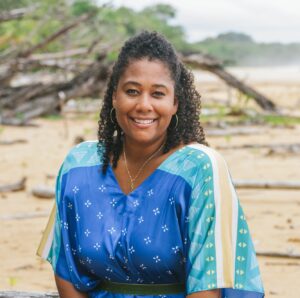 DR. CINDA P. SCOTT
Dr. Cinda P. Scott is a marine biologist, educator, conservation advocate, science communicator and world traveler. Since 2014, she has directed The School for Field Studies, Center for Tropical Island Biodiversity Studies program in Bocas del Toro, Panamá. She manages a team of faculty, staff and students dedicated to the study of anthropogenic impacts of tourism on the natural environment of Bocas del Toro. Her work includes teaching and lecturing, administrative and grants management, and scientific research. She has presented to a wide range of audiences, including students of all ages, government authorities, and concerned community stakeholders. Her current research examines the health of mangrove ecosystems throughout the Bocas del Toro Archipelago and she maintains interests in marine protected areas, coral reef ecology, and conservation biology. Follow her adventures around the world at www.cindaseas.world.
Bringing the Ocean to the People – Public Facing Marine Science Careers.
Join us to learn about the many ways information about our ocean makes its way through the world. We’ll hear from a Curator at the Mystic Seaport Museum, who brings the history of the ocean to the public, a professor in Maritime Studies who writes books on our human interconnection with the ocean, the founders of Blue Latitudes, a women-owned marine environmental consulting firm, and marine science policy advocate who helps to create sustainable business solutions for our ocean. We’ll get to hear about each of our panelists’ journeys throughout their careers, and get the chance to ask them questions about how they became ocean advocates!
Anupa Asokan is an ocean advocate and avid waterwoman who works at the intersection of marine science, policy, and communication. She has worked at the US National Oceanic and Atmospheric Administration, led the Ocean Initiative and Government Affairs at XPRIZE Foundation, and is currently engaged in 30×30 efforts for the state of California and is Director of Ocean Impact at Bureo. Anupa serves on the national Board of Directors for the Surfrider Foundation and helps lead their justice, equity, diversity, and inclusion work. She is a graduate of UCLA, and the University of Rhode Island’s Graduate School of Oceanography and College of Business. Anupa spends her free time snorkeling, fishing, surfing, and paddling around Southern California.
Emily Hazelwood is a marine conservation biologist and offshore energy consultant. She has a B.A. in Environmental Science from Connecticut College and an M.A.S degree in Marine Biodiversity and Conservation from Scripps Institution of Oceanography. Emily was recognized on the Forbes 30 Under 30 list in the energy sector for her work with Blue Latitudes to develop sustainable, creative, and cost-effective solutions for the environmental issues that surround the offshore energy industry. Emily has extensive experience as a project manager conducting marine environmental impact assessments and designing and implementing Remotely Operated Vehicle (ROV) surveys for governmental agencies and private sector clients worldwide. Much of her work is centered around the ecological, socio-economic, regulatory, and policy issues surrounding the implementation of Rigs to Reefs programs in the United States and internationally. Mrs. Hazelwood previously worked on the BP 252 Oil Spill in the Gulf of Mexico. This is where she witnessed firsthand the destruction and devastation wrought by an oil spill. However, it is also where she learned of a unique silver lining despite the realities of offshore oil and gas development, the Rigs to Reefs program.
Krystal Rose is the Curator of Collections at Mystic Seaport Museum, overseeing various aspects of the general collection of objects and art. She has managed the Mystic Seaport for Educators website and project since 2010 and has held multiple roles over the years in both the Collections and Education Departments. She holds a Bachelor of Arts degree in History from the University of North Carolina- Wilmington and a Master of Fine Arts in Historic Preservation from the Savannah College of Art & Design.
Helen M. Rozwadowski is a professor of History and founder of the Maritime Studies program at the University of Connecticut, Avery Point. She graduated from Williams College and received her M.A. and Ph.D. from the University of Pennsylvania in 1996. Her teaching includes environmental history, history of science, and public history, as well as interdisciplinary maritime studies courses. Her latest book, Vast Expanses: A History of the Oceans (2018), demonstrates that the human relationship with the ocean began in evolutionary time and has tightened dramatically since then, aims to provide a model for writing ocean history, and argues that ocean histories must examine and historicize the technologies and knowledge systems that enabled and accompanied human interactions with the sea. Her book, Fathoming the Ocean: The Discovery and Exploration of the Deep Sea (2005), which reveals the simultaneous scientific and cultural discovery of the ocean’s depths in the mid-nineteenth century, won the History of Science Society’s Davis Prize for best book directed to a wide public audience. She has written a history of 20th-century marine science, The Sea Knows No Boundaries (2002), a history of 20th century marine sciences supporting international fisheries policy. She has co-edited three volumes that have helped establish the field of history of oceanography: Soundings and Crossings: Doing Science at Sea 1800-1970 (2017), The Machine in Neptune’s Garden: Perspectives on Technology and the Marine Environment (2004), and Extremes: Oceanography’s Adventures at the Poles (2007). Rozwadowski has worked in the past both as a public historian and also in academia. She won the Ida and Henry Schuman Prize from the History of Science Society, was awarded the William E. & Mary B. Ritter Fellowship of the Scripps Institution of Oceanography, and has received grants and fellowships from the Rachel Carson Center for Environment and Society, the UConn Humanities Institute, National Endowment for the Humanities, National Science Foundation, and the Smithsonian Institution.
Amber Sparks is a marine environmental scientist and oil and gas consultant. She has a B.A. in Marine Science from UC Berkeley and an M.A.S. in Marine Biodiversity and Conservation from Scripps Institution of Oceanography. In 2018, Amber was recognized on the Forbes 30 Under 30 list in the energy sector for her work with Blue Latitudes to develop sustainable, creative, and cost-effective solutions for the environmental issues that surround the offshore energy industry. Amber also has a strong background in technology and public outreach. A former Ocean Curator at Google, she engineered and launched intelligent layers in Google Earth and Google Maps that distill and relate complex concepts in ocean science for a variety of audiences. Today she uses those skills in the oil and gas industry to map fishing activity in proximity to offshore structures and inform decommissioning decisions in relation to commercial fisheries. Mrs. Sparks specializes in ecological impact assessments, marine biological monitoring, and habitat restoration through the lens of the Rigs to Reefs program. Her work is primarily centered around the ecological, economic, and social issues surrounding the implementation of a Rigs-to-Reefs decommissioning option in California and internationally.
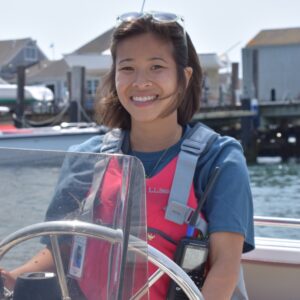 Sydney Clays graduated from the Massachusetts Maritime Academy in 2021 with a B.S. in Marine Safety Science and Environmental Protection. Prior to her formal education career, Sydney was a student at NESS, who became a Summer Educator for the past few years. Directly following graduation, she entered the Masters of Environmental Science and Management program at the University of Rhode Island. While completing this program in the Wetland, Watershed, and Ecosystem Science track, she is also pursuing a graduate certificate in Aquaculture and Fisheries.
During her studies, Sydney has managed to further obtain achievements such as her captain’s license, open water dive certification, and her oil spills first responder training certificate. This semester Sydney has additionally been hired as a fellow at the Coastal Resources Center of Rhode Island, where she is working on various aquaculture and fisheries projects around the state. After graduation she hopes to continue her work in environmental education, bridging the gap between science and stakeholders.
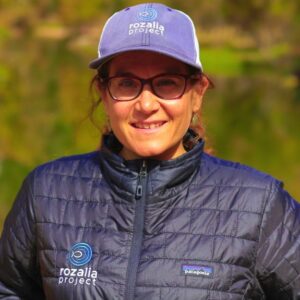 Rachael Miller is the co-founder of the Rozalia Project for a Clean Ocean. It is for her great-grandmother that the organization is named. Rachael was the first Executive Director of the Rozalia Project. She is now the Founder/CEO of the Cora Ball, a consumer-based solution to microfiber pollution. Rachael holds a USCG 50-ton Master’s license and captains the 60’ sailing research vessel, American Promise, trains remotely operated vehicle pilots for VideoRay, has been a member of the US Sailing Training Committee, and is a National Geographic Explorer. Her academic background is in marine studies and underwater archaeology which she studied at Brown University. She lives in Vermont and loves to ski as much as sail.
Affiliations: VideoRay: trainer, US Sailing: a member of Training Committee, Tall Ships America: a member of the conference committee for Administrators and Educators Forum, New York Harbor School: Professional Advisory Committee – ocean engineering & marine biology, National Geographic Explorer.
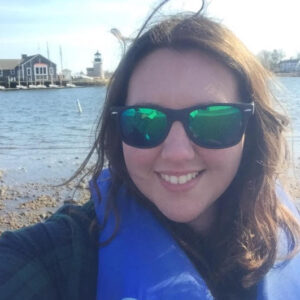 Liz Sistare is the Supervisor of the Sailing Center at Mystic Seaport Museum. Liz has spent the past decade working at maritime museums leading experiential education programs both on and off the water. At Mystic Seaport Museum she runs both a residential and day summer camp as well as a number of Spring and Fall classes including powerboating handling and women’s sailing classes. Before coming to Mystic Seaport Museum she sailed on Onrust out of the Connecticut River Museum and currently serves as their relief captain. She has a dual degree in History and English from UConn and her M.A. in American and New England Studies from the University of Maine where she focused on New England’s maritime culture.
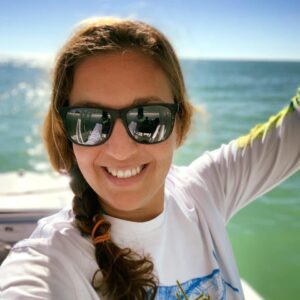 Mary Ann Thorne is a mariner, artist, educator, and ocean advocate. She has always had a great appreciation for the water, having grown up in an avid seafaring household. This led her on a path to a plethora of marine certifications and teaching experiences along the way. Her education career has taken her from island to island, guiding sailing students with Block Island Maritime Institute, advocating for marine mammals aboard whale-watching vessels in Hawaii, teaching surfing in Hawaii, teaching outdoor adventure marine science at Catalina Island Marine Institute, researching for The Nature Conservancy, and Captaining as an Education Specialist for Save the Bay, Narragansett Bay, RI
Most recently, Mary was the Program Director for New England Science & Sailing in Stonington, CT, a non-profit that provided ocean adventure programming to students from all walks of life. Putting 10,000 students on the water annually, student growth is driven by academic content including the Ocean Literacy Principles and NGSS, as well as socio-emotional growth with skills in perseverance, communication, teamwork, and self-control. Mary is a certified American Red Cross Lifeguard, NAUI Divemaster, ACA Level 1 Coastal Kayak Guide, NSSIA SUP/Surf Instructor, US Sailing Level 1 Trainer, US Sailing Reach STEM Instructor, National Faculty for US Sailing, and USCG Master 50GT Captain.
Join a NESS USCG licensed captain and learn the basics of safe boating. Students will take to the water as they learn basic powerboat maneuvers in one of our 17 ft. whalers, including docking and anchoring.
Upon successful completion of the on-water and classroom modules, students will receive their US Powerboating Safe Boating Certificate. Students will also have satisfied the Connecticut State requirements to obtain their CT State Boaters Certificate required by law. Includes: independent studying, powerboat handling, and certification.
Set in and around Stonington Harbor, this class presents students with the perfect opportunity to learn more advanced sailing techniques while becoming more comfortable on the water, specifically in the Sonar! Students will get to know the ins and outs of the Sonar, work on teamwork and communication, and skipper the boat through maneuvers on their own!
Jump aboard our fleet of keelboats and experience sailing as a team! Learn the fundamentals of sailing, cruise around Fisher’s Island Sound, and navigate Stonington Harbor on this adventure! Sailors will learn to rig and then practice the fundamentals of big-boat sailing. Sailors will execute maneuvers as both skipper and crew, with the guidance of our sailing instructor.
