Homeschool Programs
NESS SEAmester Homeschool Curricular Guide
Welcome to NESS’s SEAmester Program!
NESS offers a unique homeschool program that blends high-quality, STEM-based classroom curriculum with field-based learning and on-the-water experiences. Designed for homeschool families, SEAmester integrates hands-on, experiential education with recognized standards, including the Ocean Literacy Principles (OLP), Next Generation Science Standards (NGSS), and the Collaborative for Academic, Social, and Emotional Learning (CASEL) framework.
By combining structured academics with time spent exploring marine environments, SEAmester helps students develop strong science skills, a deeper understanding of the natural world, and social-emotional competencies — all while having fun outdoors.
Program Overview & Activities:
Each SEAmester month follows a theme, and all activities connect back to that topic.
Activities may include:
- Boat excursions
- Snorkeling
- Kayaking and paddleboarding
- Science experiments
- Field-based research
Themes rotate on a three-year cycle for ages 5-11, and on a five-year cycle for ages 12-18 to ensure students’ progress and build knowledge year after year. Note: all on-the-water and outdoor activities are weather dependent.
Academic Standards:
Ocean Literacy Principles (OLPs)
OLP outlines seven essential principles of ocean science, promoting an understanding of the ocean’s influence on people—and vice versa. These principles guide our marine-based lessons and align closely with NGSS.
Next Generation Science Standards (NGSS)
NGSS outlines what students should know and be able to do in science from kindergarten through 12th grade. The standards are built on three integrated dimensions: disciplinary core ideas, science and engineering practices, and crosscutting concepts.
Collaborative for Academic, Social, and Emotional Learning Framework (CASEL)
CASEL promotes five core competencies: self-awareness, self-management, social awareness, relationship skills, and responsible decision-making. These are embedded throughout SEAmester activities to support students’ personal growth and collaboration.
Sample Day:
9 – 9:10AM
Welcome and daily topic introduction/team building
9:10 – 10:30AM
Activity 1*
10:30 – 10:50AM
Snack 1
10:50AM – 12:10PM
Activity 2*
12:10 – 12:40PM
Lunch
12:40 – 1:50PM
Activity 3*
1:50 – 2PM
Debrief & departure
*All activities will be broken up into smaller parts, and small stretch/bathroom breaks will be available at any time.
SEAMESTER AGES 5-8 Class Schedule & Descriptions
2026-2027
Year 2
Welcome aboard! The time has finally arrived to get back out on our local waters. The best way to learn about the science flowing in the ocean is to experience it firsthand. Kayak atop currents and waves, set sail with the power of the wind, and snorkel to find out what lies below the surface. Dip a hook or two in to observe migratory species on their last hurrah before heading south. This is where adventure science comes to life!
- Activities include adventure sports, kayaking, fishing, sailing, and snorkeling
- Ocean Literacy Principle 6: The ocean and humans are inextricably interconnected
Come discover the amazing life in the ocean’s tide pools and the crowded animal communities living right around rocky shorelines and our docks. Peer into tide pools while learning about crabs, snails, algae, and more. Things cling, stick, and slide in these rocky habitats. Climb aboard a powerboat with an experienced captain and go fishing! Experiment with different types of rods, reels, and lures as you learn the techniques to bring in the catch of the day. Work together with teammates to engineer your own model trap and test it right off the docks at NESS!
- Activities include tide pooling, fishing, model building, and lure engineering
- Ocean Literacy Principle 5: The ocean supports a great diversity of life and ecosystems
- Ocean Literacy Principle 6: The ocean and humans are inextricably interconnected
It’s time to get moving! Flap your wings, flippers, and fins with animals that move across oceans, skies, and continents. Right here in Stonington Harbor, we can observe species that have travelled thousands of miles! Investigate the patterns of their movements and hypothesize future trends. Model animal movement through games and exploration. Adventure to different biomes and unveil the secrets of the safari, North American plains, the Gulf Stream, and more!
- Activities include animal tracking, team-building games, and nature walks
- Ocean Literacy Principle 5: The ocean supports a great diversity of life and ecosystems
Travel to the place of mosasaurs, megalodons, and ammonites. Where do these live? Ancient Oceans! Our ocean planet has been evolving for millions of years. Unveil secrets as new species emerge faster underwater than on land; from the smallest plankton to the largest marine reptile! Explore the ever-changing bathymetry of this watery environment... and what lies beneath it. There is ALWAYS more to be found...
- Activities include bathymetry, model building, experiments, and fossils
- Ocean Literacy Principle 7: The ocean is largely unexplored
Journey to the Arctic - an ecosystem of extremes. This cold, icy place is home to many different living things! Investigate together how the biome supports animals by providing food, shelter, and water. Explore the Arctic as you piece together the connections between living and nonliving factors that make this habitat special. Jump into the food web and create models to visualize how energy flows throughout the system. Can you become a polar explorer?
- Activities include experiments, model-building, and team-building challenges
- Ocean Literacy Principle 2: The ocean and life in the ocean shape the features of Earth
Discover the different biomes around the globe and the ecosystems that are created there. Explore the adaptations animals have to survive in different, sometimes extreme, conditions. Build a model terrarium and experiment with different roles of producers and decomposers. It’s time to hit the stage! Play games and create skits to model symbiotic relationships across different ecosystems. Adventure outside to identify any spring-blooming interactions in our very own backyard!
- Activities include games, model building, outdoor investigation, and experiments
- Ocean Literacy Principle 5: The ocean supports a great diversity of life and ecosystems
Ponder the mysterious metamorphosis of amphibians as they emerge from an aquatic world to terrestrial life. Explore a freshwater pond ecosystem and investigate the life lurking just below the water’s surface. Get up close and personal with freshwater fish, algae, plankton, frogs, macroinvertebrates, and more. Dip nets into a local pond to peer into the life below and adventure to the realm of ponds and beyond.
- Activities include dip netting, fishing, and pond surveying
- Ocean Literacy Principle 6: The ocean and humans are inextricably interconnected
2027-2028
Year 3
Welcome aboard! The time has finally arrived to get back out on our local waters. The best way to learn about the science flowing in the ocean is to experience it firsthand. Kayak atop currents and waves, set sail with the power of the wind, and snorkel to find out what lies below the surface. Dip a hook or two in to observe migratory species on their last hurrah before heading south. This is where adventure science comes to life!
- Activities include adventure sports, kayaking, fishing, sailing, and snorkeling
- Ocean Literacy Principle 6: The ocean and humans are inextricably interconnected
Water, water, everywhere! Unlock the secrets of this life-giving liquid as you explore the unique physical properties of water. Zoom in and investigate the structure of water. Discover how its polarity provides special 'superpowers' of cohesion and adhesion. Splash into the science of water to see how incredible H2O really is!
- Activities include experiments, model building, and water quality monitoring
- Ocean Literacy Principle 1: Earth has one big ocean with many features
I wanna rock, ROCK! Becoming a rock star may take more effort than you think...like millions of years under pressure. We don't have millions of years to investigate the formation of rocks, but we do have models and experiments to speed up the process! Being a rock isn't as straightforward as it seems, either; location, shape, and travel methods in and around the world are constantly changing. Collect samples, sort sediment, and see what all this Dune is about.
- Activities include rock cycle, erosion, rock ID, and angle of repose
- Ocean Literacy Principle 2: The ocean and life in the ocean shape the features of Earth
Whale, whale, whale…look who’s here! Become a marine mammalogist as you investigate the characteristics of marine mammals and their biodiversity across the ocean. Meet four main types of marine mammals and explore what adaptations make them special! From dolphins to polar bears, marine mammals make up some of the most popular and well-known sea animals, but marine mammal diversity stretches far beyond the group's more familiar faces. Grab a pair of binoculars and climb aboard a powerboat. Let’s adventure in the Long Island Sound for these marvelous creatures and find some seals!
- Activities include model-building, team-building games, marine mammal artifacts, and seal-watching
- Ocean Literacy Principle 5: The ocean supports a great diversity of life and ecosystems
The ocean is vast and full of mysteries. Explore oddities that span the shallow waters of Stonington Harbor to the Big Deep. Adventure alongside famous explorers like Ernest Shackleton and Jacques Cousteau to see what lies below. Investigate deep-sea hydrothermal vent ecosystems and witness the magic below.
- Activities include model engineering, team-building games, and experiments
- Ocean Literacy Principle 1: Earth has one big ocean with many features
- Ocean Literacy Principle 5: The ocean supports a great diversity of life and ecosystems
- Ocean Literacy Principle 7: The ocean is largely unexplored
Man-made objects are often discarded, disposed of, or abandoned in coastal environments, but have you ever thought about where they go and how they impact marine life? Investigate their movements and design a model ocean. Experiment with surface currents and explore how marine debris travels across the ocean. Dive into the mystery of where debris goes and why it's so important to keep our oceans clean!
- Activities include model engineering, experiments, coastal cleanup, and engineering with the Recycle Regatta
- Ocean Literacy Principle 1: Earth has one big ocean with many features
- Ocean Literacy Principle 6: The ocean and humans are inextricably interconnected
Get to know the bedrock of the food chain. Venture into an amazing salt marsh, one of the most productive ecosystems in our world. Explore the habitat using dip nets, perform a population study using a seine net, and investigate some incredible adaptations of local flora and fauna. Snap on a PFD and collect a sample of plankton right off NESS docks! Zoom in on these mini plants and animals with microscopes, you might even find something new! Engineer your own model plankton and enter it into the annual NESS SEAmester Plankton Olympics. Discover how the largest animals on earth rely on the smallest and identify why these teeny tiny creatures are so important to you and me!
- Activities include microscope investigations, experiments, model-building, and tide pooling
- Ocean Literacy Principle 4: The ocean makes Earth habitable
- Ocean Literacy Principle 5: The ocean supports a great diversity of life and ecosystems
2028-2029
Year 1
Welcome aboard! The time has finally arrived to get back out on our local waters. The best way to learn about the science flowing in the ocean is to experience it firsthand. Kayak atop currents and waves, set sail with the power of the wind, and snorkel to find out what lies below the surface. Dip a hook or two in to observe migratory species on their last hurrah before heading south. This is where adventure science comes to life!
- Activities include adventure sports, kayaking, fishing, sailing, and snorkeling
- Ocean Literacy Principle 6: The ocean and humans are inextricably interconnected
Feast with the fishes and rise with the tide as we explore the local ecology of Stonington Harbor. Dive into the extreme environment of rocky intertidal zones and investigate the superpowers of the plants and animals that call it home. Design experiments to model equilibrium in a coastal environment. Throughout these investigations, games, and models, get outside and get your hands wet, feet muddy, and pants sandy!
- Activities include fishing, tidepooling, dip netting, and model-building
- Ocean Literacy Principle 5: The ocean supports a great diversity of life and ecosystems
Have you ever wondered why a sunfish floats or how animals see the deep dark ocean? Animals have adapted to live in their environment based on which ocean zone they survive in! Peer into the sunlight zone, dive into the twilight zone, journey into the midnight zone, and sink into the abyssal and hadal zones. Explore together and discover how marine life has adapted to thrive within these extreme environments. Explore the layers of the sea by seeing how density creates different "worlds" in the water column. From the bright surface to the dark depths, discover the wild creatures that live in each layer and even create your very own ocean model to see how these layers stack up!
- Activities include experiments, model-building, and team-building games
- Ocean Literacy Principle 1: Earth has one big ocean with many features
- Ocean Literacy Principle 5: The ocean supports a great diversity of life and ecosystems
- Ocean Literacy Principle 7: The ocean is largely unexplored
What's the difference between weather and climate? You can't weather a tree, but you can climate! You can’t be cirrus! (ba dum tis) Or more scientifically, climate is the weather patterns for an area over a large timescale, but that's not as funny! Investigate different geographical areas to determine how weather can differ from place to place. Analyze weather data for Stonington to determine how the seasons change throughout the year. Engineer your very own weather tools to measure wind speed and direction, pressure, and temperature. Step into the shoes of a meteorologist as you report the weather live from Stonington Harbor, decoding incoming weather while reading the secret language of the clouds. Will December weather be cloudy with a chance of meatballs?
- Activities include engineering, nature walks, weather experiments, and model-building
- Ocean Literacy Principle 3: The ocean is a major influence on weather and climate
BunGEEZE this is fun! Join SEAmester physicists as we experiment with the forces that are all around us. Drop cars from high elements- can you create the quickest loop? Become an eggcellent engineer as you design an elastic bungee to bounce an egg without breaking- can you reach the ceiling? Get ready to lose your marbles with our marble drop challenge. Bounce, shoot, and balance marbles to investigate kinetic and potential energy. Collaborate with teammates to design a chain reaction and put it all together at the end of the month by building a Rube Goldberg Machine!
- Activities include experimental design, engineering, and model-building
Tap into your inner engineer as you investigate, design, and develop innovative ways to sustainably use power from nature. Get blown away as you create your own devices to capture wind energy. Explore the science behind solar energy through experiments and model building. Dive into the turbulent forces behind waves and engineer methods to capture their energy. Find inspiration from the natural world around us as you blueprint and build your models. Strengthen your teambuilding and communication skills as you journey along the engineering design process throughout the month.
- Activities include experiments, engineering, team team-building challenges
- Ocean Literacy Principle 3: The ocean is a major influence on weather and climate
- Ocean Literacy Principle 6: The ocean and humans are inextricably interconnected
Dive into the world of fin-tastic fun with Marine Biology – the ultimate splash zone for young ocean explorers! Witness the magic of the underwater circus- dance with the jellies, balance on rocks with crabs, and soar into the deep blue with migrating fish. From the rockstar marine mammals to the microscopic plankton party, get ready for some seriously fishy business! Observe local species to learn about external anatomy and the adaptations fish use to best survive in their environment.
- Activities include experiments, model building, seine netting, tidepooling, beach combing, and squid dissections
- Ocean Literacy Principle 5: The ocean supports a great diversity of life and ecosystem
SEAMESTER AGES 9-11 Class Schedule & Descriptions
2026-2027
Year 2
Welcome aboard! The time has finally arrived to get back out on our local waters. The best way to learn about the science flowing in the ocean is to experience it firsthand. Kayak atop currents and waves, set sail with the power of the wind, and snorkel to find out what lies below the surface. Dip a hook or two in to observe migratory species on their last hurrah before heading south. This is where adventure science comes to life!
- Activities include adventure sports, kayaking, fishing, sailing, and snorkeling.
- Ocean Literacy Principle 6: The ocean and humans are inextricably interconnected
Fishy fishy, cross my ocean….but don’t get caught! Or do! Stonington Harbor has a rich history in commercial fishing. Explore the methods fishermen use to catch the tasty food from the depths. Investigate the use of different equipment, from rods, reels, lures, traps, trawls, and more. Jump into a powerboat and try your hand at fishing! Dive deeper into the complex world of fisheries management through games and models. Design your own commercial fishery, do your methods stand the test of time?
- Include fishing, trap engineering, model design, and team-building games
- Ocean Literacy Principle 6: The ocean and humans are inextricably interconnected
It sounds impossible - no light, no food, no warmth - but guess what? The deep sea is FULL of incredible creatures that have figured out how to survive in this wild, mysterious world! Come on a deep-sea adventure and discover how animals have special adaptations to live in pitch-black depths. Dive into the dark deep waters of the sea to model how colossal squid and blobfish communicate in the dark without using sound. Navigate the dark waters and examine how light travels throughout the layers of the ocean. Mime your way through darkness using light patterns, slide past predators using bioluminescent slime, and see if you can make it out of the abyss alive.
- Activities include bioluminescence modeling, deep-sea exploration, and slime experiments
- Ocean Literacy Principle 7: The ocean is largely unexplored
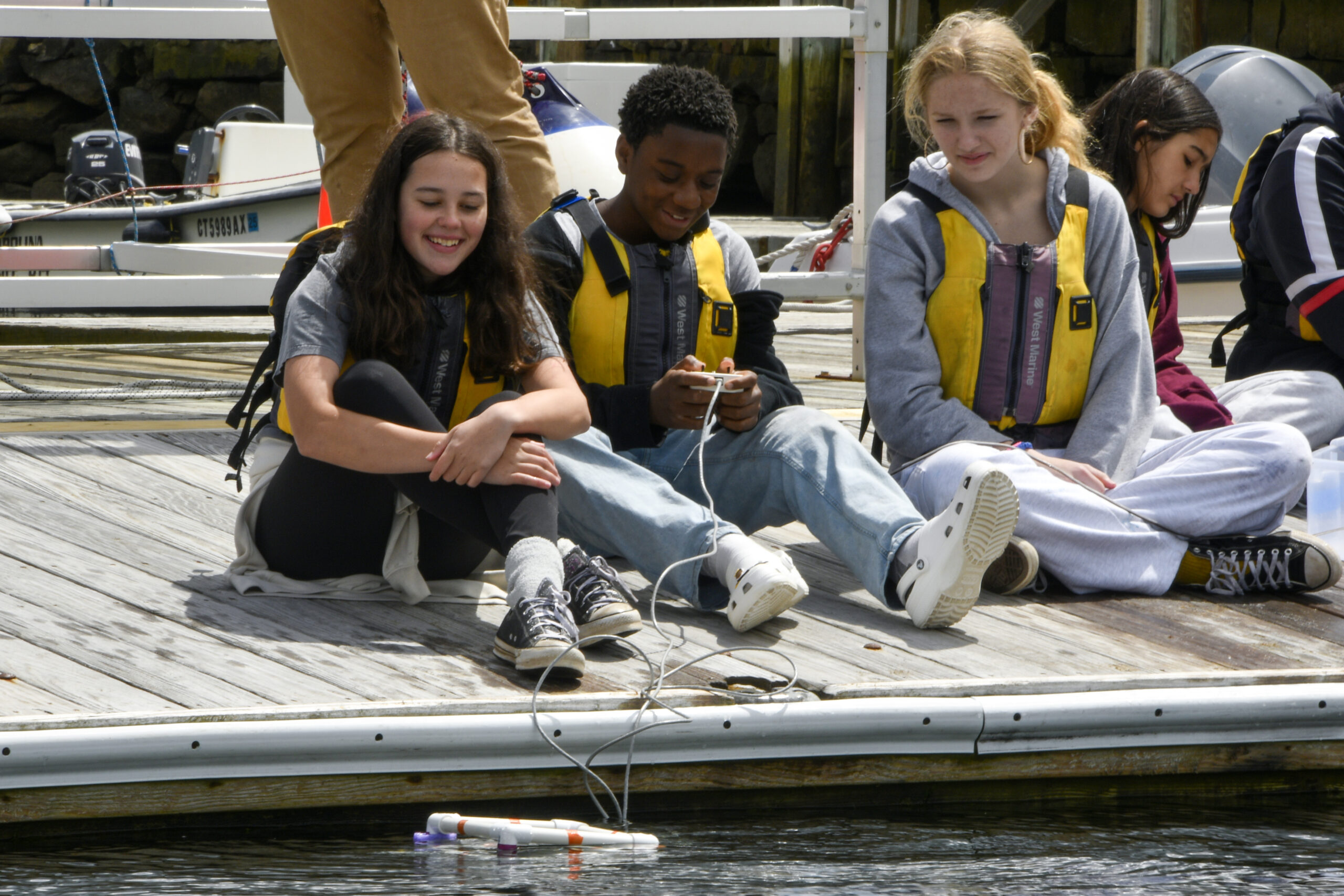
Spin, twist, duck, and dive beneath the waves. Build a remotely operated vehicle (ROV) in teams to explore the watery depths below NESS docks. Propel your designs forward through additional navigational challenges in Stonington Harbor. Experiment with buoyancy to maneuver your ROV through the water column and investigate the challenges of ocean exploration and engineering.
- Activities include PVC engineering, experiments, and team-building challenges
- Ocean Literacy Principle 7: The ocean is largely unexplored
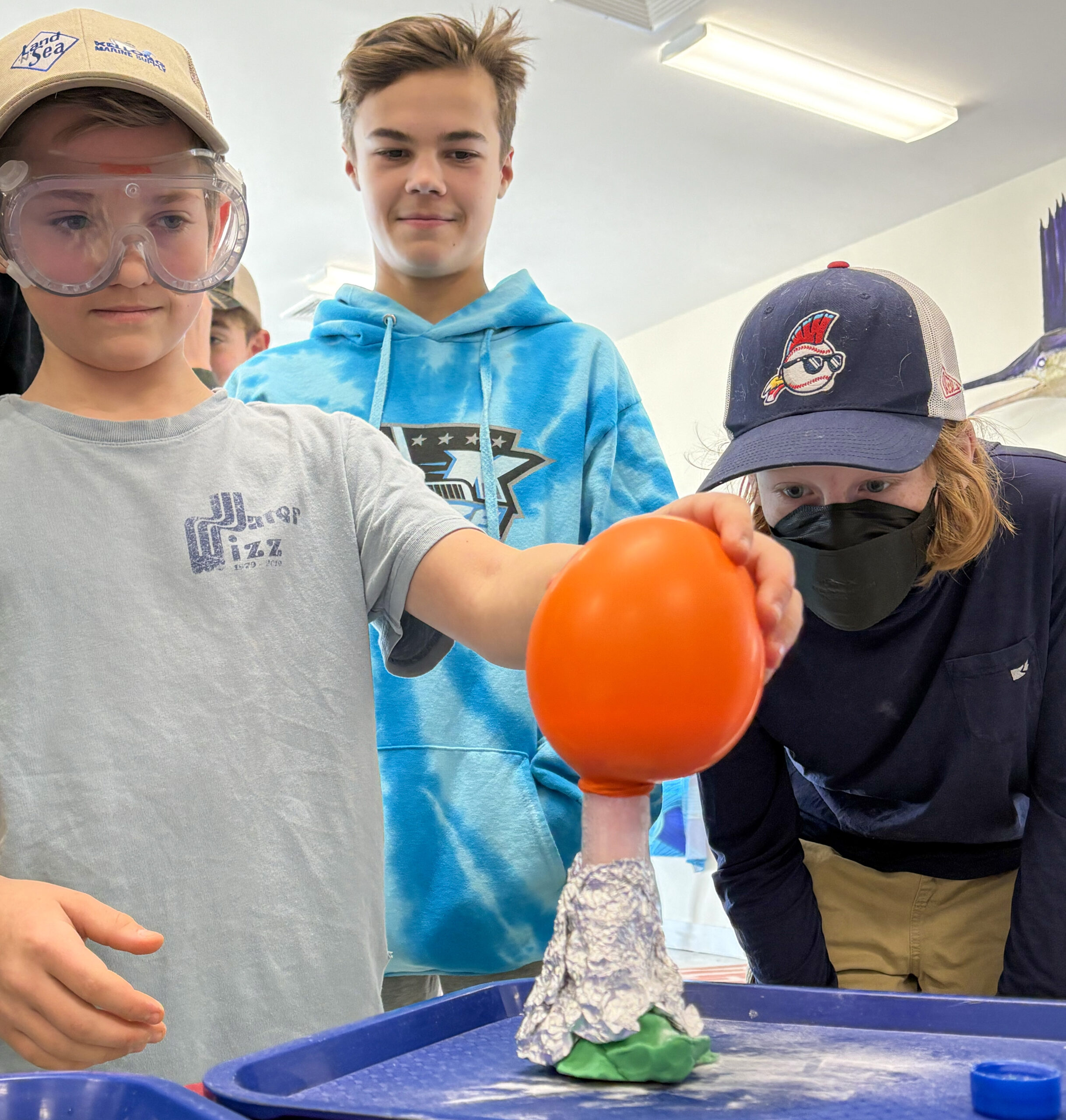
What makes slime gooey but not too sticky? How can a soda bottle explode but not water? From supporting healthy ecosystems to special adaptations, chemistry is responsible for every function in the ocean. Embark on a journey to discover how everyday chemistry and ocean science are intertwined! Design experiments to witness the magic behind reactions in teams. Water molecules are incredibly strong, zoom in to the molecular level of water to witness its strength firsthand! Apply your findings to the sea and discover truly how magical ocean chemistry really is!
- Activities include experiments, model building, and team-building activities
- Ocean Literacy Principle 1: Earth has one big ocean with many features
Explore the impacts that plastic pollution has on humans and biodiversity. Experiment to extract microplastics from common products while discussing how microplastics form. Become a community scientist and record marine debris data as you participate in a shoreline cleanup. Consider human impacts on local waterways by safely experimenting with the effects of oil spills on animals and our environment. Design an environmental action plan to make a difference in Stonington Harbor and beyond!
- Activities include microscopes, coastal cleanup, model-building, and experiments
- Ocean Literacy Principle 6: The ocean and humans are inextricably interconnected
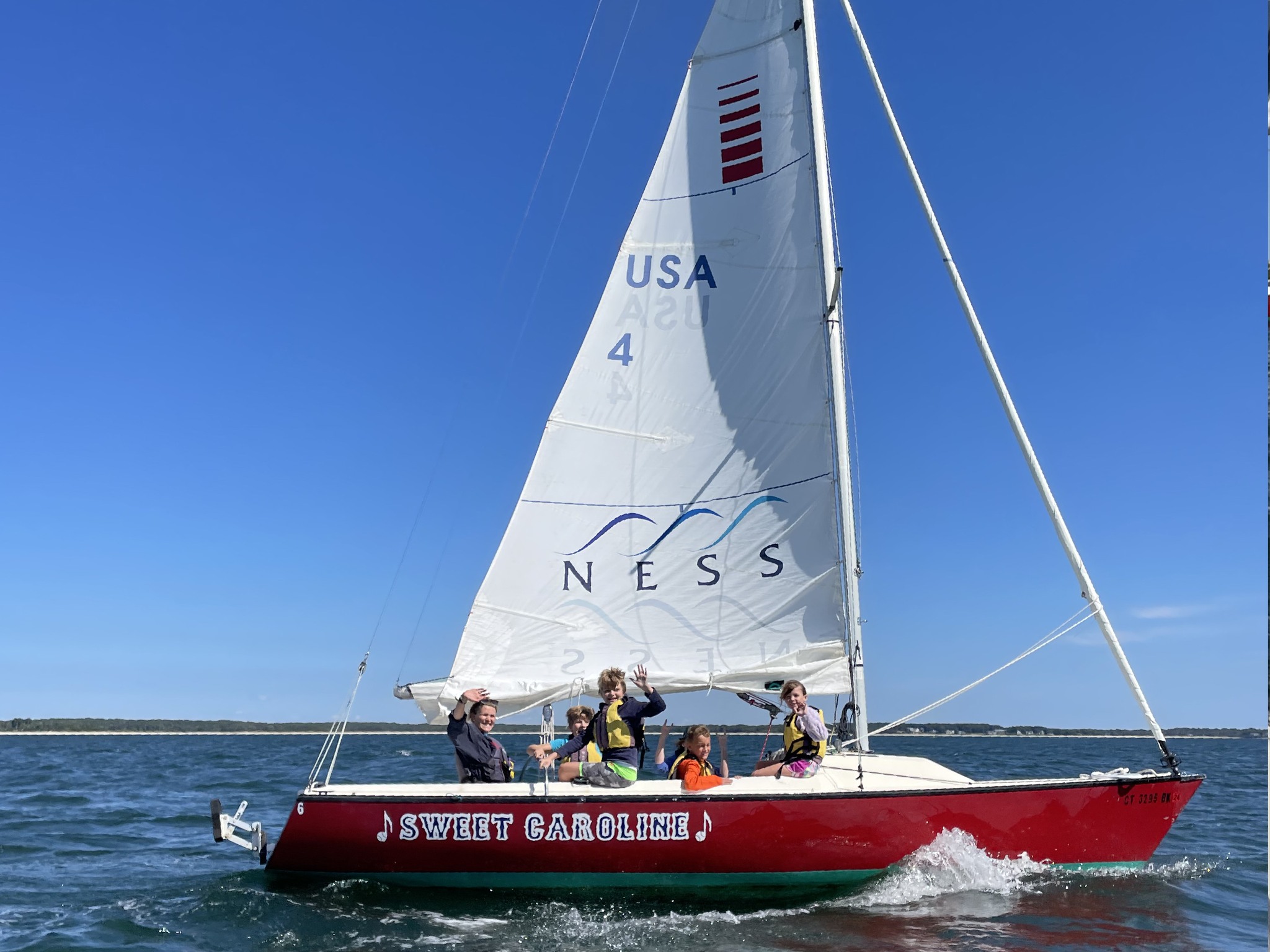
How do teams communicate and succeed when sailing faster than the speed of the wind? Explore the dynamics of what makes a talented and successful team and how humans engineer technology to translate human power to boat speed. Collaborate towards a common goal, explore simple machines, and engineer a chain reaction. Work together to design a racecourse and make decisions to navigate. Challenge your fellow teammates to design and create your own foiling sailboat that flies with the wind! All of your observations and experience will lead back to the discovery of how sailors use technology and teamwork! Journey aboard a keelboat to navigate the Stonington Harbor and Fishers Island Sound waters.
- Activities include sailing, engineering challenges, and team-building activities
- Ocean Literacy Principle 6: The ocean and humans are inextricably interconnected
2027-2028
Year 3
Welcome aboard! The time has finally arrived to get back out on our local waters. The best way to learn about the science flowing in the ocean is to experience it firsthand. Kayak atop currents and waves, set sail with the power of the wind, and snorkel to find out what lies below the surface. Dip a hook or two in to observe migratory species on their last hurrah before heading south. This is where adventure science comes to life!
- Activities include adventure sports, kayaking, fishing, sailing, and snorkeling
- Ocean Literacy Principle 6: The ocean and humans are inextricably interconnected
Have you ever wondered what magical mechanics allow sailboats to navigate around our oceans? Join NESS to explore the elements of wind and how humans engineer designs to harness this power source. Model what forces drive wind currents and explore different natural and man-made aerodynamic objects. Collaborate with teammates to design and test wind turbine blades for energy output. Analyze and report on weather and wind data to connect how this affects sailboat performance. Move through the engineering design process to test different sail designs and create a sail that captures and transfers wind into speed. With interviews and connections to American Magic team members along the way, students role-play in different career paths and see how science and sailing are intertwined. Practice rigging a sailboat and set sail in Stonington Harbor to harness the energy of the wind yourself!
- Includes sailing, engineering challenges, team-building activities, and experiments
- Ocean Literacy Principle 6: The ocean and humans are inextricably interconnected
All good adventures start with choosing a direction! Explore different ways humans have explored the world from celestial navigation to modern technology. Observe maps and charts and play games using compasses to enhance your navigation skills. Create your own coastline and harbor while working together with your teammates to navigate through a channel, and around other obstacles and sticky situations. Put your navigational skills to the test around Stonington Borough with a geocache scavenger hunt!
- Activities include geocaching, model building, and team-building activities
- Ocean Literacy Principle 6: The ocean and humans are inextricably interconnected
Tap into your inner engineer as you investigate, design, and develop methods to sustainably use the ocean's power. Get blown away as you create your wind turbines to harness wind power and dive into the turbulent forces behind water and engineer your hydropower wheel. Become stewards of the ocean as you draw connections from solar, wind, geothermal, and water energy to create your own innovative blue technology design. Strengthen your teambuilding and communication skills as you journey through the engineering design process throughout the month.
- Activities include engineering challenges, experiments, and team-building activities
- Ocean Literacy Principle 3: The ocean is a major influence on weather and climate
You have heard of the Industrial Revolution, but what about the Biomimicry Revolution? Nature has always inspired humans, which leads to designing innovative technology! Slow down, zoom in, and take a close look at the natural world that surrounds us all. Investigate adaptations of intertidal organisms, terrestrial plants, ocean life, and beyond, and let it inspire you! Let your imagination run wild! Work together to blueprint and build your own biomimicry prototype. Sometimes the answer to a problem is buzzing right around us. It’s time to look to the sky, the ocean, and beyond!
- Activities include ecosystem exploration, model-building, presentations, and engineering challenges
- Ocean Literacy Principle 5: The ocean supports a great diversity of life and ecosystems
From land to sea, farming knows no boundaries! Explore how food grown in the ocean is used for food and goods around the world. Investigate the adaptations of algae through collection, dissection, and the use of microscopes. Design models to mimic their adaptations that make them special. Take a closer look at our local oyster and kelp farms, and dive into the science behind their role in minimizing human impact in Fishers Island Sound. Engineer an aquaponic system and model the nutrient flow from animals and plants.
- Activities include aquaponics engineering, water quality monitoring, and model design
- Ocean Literacy Principle 4: The ocean makes Earth habitable
- Ocean Literacy Principle 6: The ocean and humans are inextricably interconnected
Ecosystem who? Ecosystem you, that rock, those bees, these fish, and everything in between! Everything, everywhere, all at once, is part of an ecosystem- sometimes even more than one! We know, we know, this notion may appear too large to investigate. In reality, it is a grand adventure FULL of investigation. Get up close and personal with the living and nonliving inhabitants of local ecosystems, conduct field monitoring, and determine the implications of biomass vs. biodiversity. Won’t you be, won’t you be, my neighbor?
- Activities include seining, dip netting, and coastal exploration
- Ocean Literacy Principle 5: The ocean supports a great diversity of life and ecosystem
2028-2029
Year 1
Welcome aboard! The time has finally arrived to get back out on our local waters. The best way to learn about the science flowing in the ocean is to experience it firsthand. Kayak atop currents and waves, set sail with the power of the wind, and snorkel to find out what lies below the surface. Dip a hook or two in to observe migratory species on their last hurrah before heading south. This is where adventure science comes to life!
- Activities include adventure sports, kayaking, fishing, sailing, and snorkeling
- Ocean Literacy Principle 6: The ocean and humans are inextricably interconnected
Humans and the ocean are intertwined in many curious ways! Investigate the local and migratory animals through fishing and seining. Collect data on species biodiversity in our local waters. Explore the Long Island Sound estuary while sailing with the wind in a keelboat. Unravel the environmental impacts humans can make in the ocean industry and travel along the way. Measure water quality variables such as dissolved oxygen, pH, salinity, and more to understand these impacts. Through hands-on activities and experiments, this program empowers students to understand and appreciate our connection with the ocean.
- Activities include water quality monitoring, model-building, team-building games, and experiments
- Ocean Literacy Principle 5: The ocean supports a great diversity of life and ecosystems
- Ocean Literacy Principle 6: The ocean and humans are inextricably interconnected
All heroes start somewhere! Unite as the future Guardians of the Globe to keep our planet beautiful and healthy. Investigate the impacts of climate change through model-building and experiments. Put your engineering skills to the test and build a model city and coastline. Test it against wind, waves, and sea level rise. Collaborate with teammates to identify solutions and make changes. Together, you can make a difference in combating climate change!
- Activities include experiments, model-building, engineering, team-building games, and nature walks
- Ocean Literacy Principle 3: The ocean is a major influence on weather and climate
- Ocean Literacy Principle 6: The ocean and humans are inextricably interconnected
Have you ever wondered what forces are driving the ocean's motion? Tune in this month to evaluate the different physical and chemical processes that occur in the ocean daily! Put on your thinking caps to differentiate the driving forces behind tides, waves, currents, and gyres, oh my! Become oceanographers and use models to simulate how different forces affect ocean currents. Predict how nutrients and biology fit into this oceanographic equation to create the seas we know and love!
- Activities include experiments, model-building, nature walks, and team-building games
- Ocean Literacy Principle 1: Earth has one big ocean with many features
- Ocean Literacy Principle 2: The ocean and life in the ocean shape the features of Earth
- Ocean Literacy Principle 3: The ocean is a major influence on weather and climate
Can you imagine being able to taste with your fingertips, change color instantly, or fit your entire body into a tiny soda bottle? Immerse yourself into the realm of the spineless. From the insects and spiders that thrive on land to the horseshoe crabs, shrimp, and squid that live in the ocean, invertebrates are everywhere! Explore the fascinating world of oysters and their ecological impact. Dissect a squid to investigate its bizarre adaptations. Challenge yourself to filter water as well as a bivalve. Come and discover the amazing and zany worlds of animals without backbones.
- Activities include dissections, engineering challenges, model-building, and experiments
- Ocean Literacy Principle 5: The ocean supports a great diversity of life and ecosystems
Do you know where your drinking water comes from? What happens to the water that goes down the drain when you brush your teeth? Every day, people use water and change the natural systems that keep it fresh and clean. Explore how we impact the watersheds that sustain our population. Create a model coastal community and see how pollutants travel within a watershed. Collaborate with teammates and identify ways to minimize our impact. Spread the word and design your own environmental action project for Stonington Borough and beyond!
- Activities include watershed modeling, augmented reality sandbox, nature walks, and ecosystem monitoring
- Ocean Literacy Principle 6: The ocean and humans are inextricably interconnected
Why do sailboats float, and how do they navigate the different waves and currents in the oceans? Investigate how water impacts sailing and sailboat design. Explore surface and deep ocean currents and dive into the forces that make them unique. Model ocean waves and design a boat that can withstand varying sea state conditions. Work together to design a wave buoy that captures energy from the ocean. Float through the ocean waves and learn how sailors and engineers design hulls to withstand the natural elements! Journey aboard a keelboat to navigate the Stonington Harbor and Fishers Island Sound waters and witness the magic behind the science of water firsthand!
- Activities include sailing, engineering challenges, and team-building activities
- Ocean Literacy Principle 6: The ocean and humans are inextricably interconnected
SEAMESTER AGES 12-18 Class Schedule & Descriptions
2026-2027
Year 2
Hoist the sails, it’s time to go on an adventure! Dive into the world of physics as you investigate different principles while sailing. Climb aboard a keelboat and navigate safely in Stonington Harbor & Fishers Island Sound. Work together to sail dinghies with teammates to practice your boat handling skills. Try something new - rig a windsurfer and feel the power of the wind as you sail away! Connect the concepts of weather, navigation, and physics throughout your sailing adventures. Bring the elements of waves and wind indoors with engineering challenges. Show off your skills and connect your on the water experience to demonstrate the science behind sailing.
- Activities include Sonar and Dinghy Sailing, Taste of Windsurfing, weather engineering challenges, and navigation games
- Ocean Literacy Principle 3: The ocean is a major influence on weather and climate
- Ocean Literacy Principle 4: The ocean makes Earth habitable
All things on planet Earth play a role in maintaining our resilient, yet delicate, global ecosystem. Trace how organisms have converged, diverged, and interwoven to create complex family trees. Unearth secrets of the past through phylogenetic study, observing distinct transitions in anatomy, habitats, and climate. Participate in comparative anatomy dissections to decipher what form and function can tell us about an ecosystem. Conduct field experiments to see how flora and fauna provide essential ecosystem services. Identify a keystone species to research and present how ecologically important it is.
- Activities include dissections, dichotomous keys, field experiments, and presentations
- Ocean Literacy Principle 5: The ocean supports a great diversity of life and ecosystems
2027-2028
Year 3
Use science and adventure to shift your fishing credit from luck to intentional success! The secrets fishermen hold regarding elite fishing spots, effective tackle, and being in “the right place at the right time” are earned through experience, exposure, and methodical research. Species’ anatomy, habitat, life strategies, and ecological relationships determine the who, what, when, where, and why of successful fishing. Gain the skills and confidence necessary to independently prepare the proper tackle and rig. Understand the preferred habitats of target species through first-hand observation. Deepen your perception of how these animals live by diving into their unique anatomy. Take on a holistic approach to fishing to continue the lifelong endeavor of becoming the ultimate fisherman. Includes the US Sailing Safe Powerboat Handling Course, which leads to a CT Certificate of Personal Watercraft Operation (CPWO) upon successful completion.
- Activities include fishing expeditions, US Sailing Safe Powerboat Handling Course, and identifying the right equipment to catch a target species
- Ocean Literacy Principle 6: The ocean and humans are inextricably interconnected
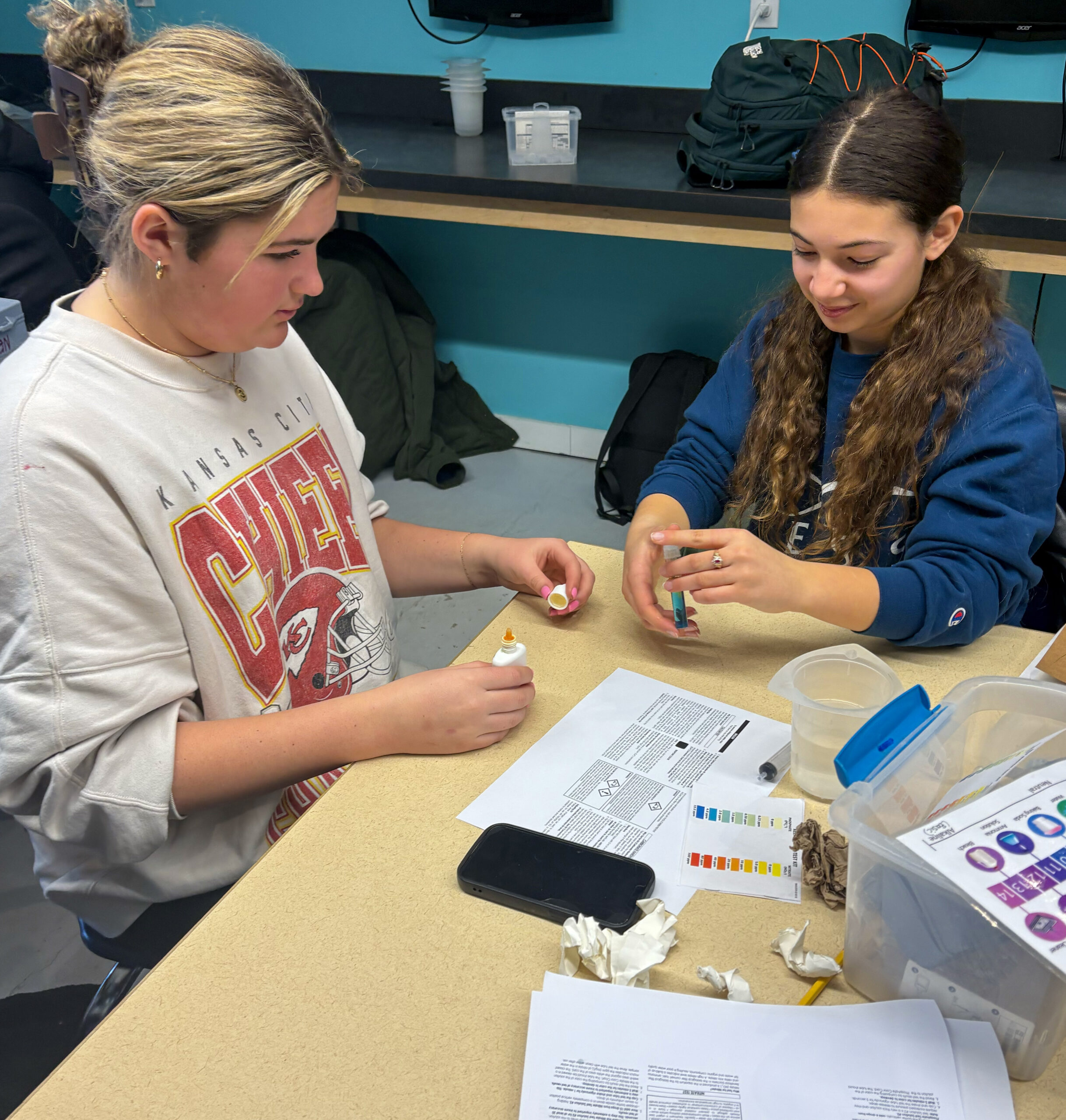
Embark on a journey where students will engage in a variety of hands-on experiments and demonstrations to investigate our everyday world and the ocean. Start off the semester by deepening your understanding of chemistry with hands-on experiments, model building, and team challenges. Apply your skills to the marine world as we dive into chemical oceanography. Monitor the water quality of the harbor, design experiments, and analyze the human impact on biogeochemical processes in our community. Work together to expand experiments from the classroom to real-world applications.
- Activities include water quality experiments, carbon cycling, and biogeochemical processes
- Ocean Literacy Principle 2: The ocean and life in the ocean shape the features of Earth
2028-2029
Year 4
Hoist the sails, it’s time to go on an adventure! Dive into the world of physics as you investigate different principles while sailing. Climb aboard a keelboat and navigate safely in Stonington Harbor & Fishers Island Sound. Work together to sail dinghies with teammates to practice your boat handling skills. Try something new - rig a windsurfer and feel the power of the wind as you sail away! Connect the concepts of weather, navigation, and physics throughout your sailing adventures. Bring the elements of waves and wind indoors with engineering challenges. Show off your skills and connect your on-the-water experience to demonstrate the science behind sailing.
- Activities include Sonar and Dinghy Sailing, Taste of Windsurfing, weather engineering challenges, and navigation games
- Ocean Literacy Principle 3: The ocean is a major influence on weather and climate
- Ocean Literacy Principle 4: The ocean makes Earth habitable
Explore different aspects of the global climate change problem, including the science and policy surrounding the phenomenon. Investigate different environmental problems, such as sea level rise, ocean acidification, and extreme weather, and analyze how these problems affect the Long Island Sound. Identify an environmental problem in the Long Island Sound and develop a plan to help mediate it. Adventure around Stonington Harbor to build models, experiment, and collaborate with teammates to investigate the science behind climate change.
- Activities include team-based research projects, weather event exploration, data collection, and analysis
- Ocean Literacy Principle 3: The ocean is a major influence on weather and climate
2029-2030
Year 5
Surf, kayak, and stand-up paddleboard (SUP) with intention! Improve your skills by diving into the science of watersport mechanics. Physics, chemistry, and kinesiology dominate the realm of marine recreation. Translate principles learned in the classroom into effectively riding a wave, balancing on a board, and conserving energy aboard a paddlecraft. Discover why marine scientists utilize adventure sports to further their research and why professional athletes are so hooked on these sports!
- Activities include paddling kayaks, stand-up paddleboards, taste of surfing, wave models, current exploration, and physics experiments
- Ocean Literacy Principle 6: The ocean and humans are inextricably interconnected
Dive into the science of Long Island Sound! From the horseshoe crab to the comb jelly to the dogfish, there is so much life to be found in Long Island Sound! Discover the ecology of the region’s largest estuary as you perform scientific research on the plants and animals that call the Long Island Sound home. Investigate the biotic and abiotic factors that make the Long Island Sound such a unique ecosystem. Discover field methods for collecting data and what this data can mean for your community. Apply this knowledge by participating in engineering challenges and developing a stewardship project as you give back to the natural world.
- Activities include green technology modeling, ecological field monitoring, and engineering challenges
- Ocean Literacy Principle 5: The ocean supports a great diversity of life and ecosystems
2030-2031
Year 1
Surf, kayak, and stand-up paddleboard (SUP) with intention! Improve your skills by diving into the science of watersport mechanics. Physics, chemistry, and kinesiology dominate the realm of marine recreation. Translate principles learned in the classroom into effectively riding a wave, balancing on a board, and conserving energy aboard a paddlecraft. Discover why marine scientists utilize adventure sports to further their research and why professional athletes are so hooked on these sports!
- Activities include paddling kayaks, stand-up paddleboards, taste of surfing, wave models, current exploration, and physics experiments
- Ocean Literacy Principle 6: The ocean and humans are inextricably interconnected
The ocean and humans are inextricably interconnected. Sail Long Island Sound while learning how the sound was formed. Explore marshes on foot to see how the unique geology keeps the environment healthy. Investigate the challenges of shoreline communities through hands-on watershed modeling. Learn how to read a topographical map and predict where water flows. Use an augmented reality sandbox to simulate and visualize the shape of a watershed and build your own watershed to explore erosion, runoff, and determine how coastal habitats are impacted. Investigate local efforts to minimize stormwater runoff and analyze impacts on water quality.
- Activities include watershed modeling, sailing, and marsh exploration
- Ocean Literacy Principle 1: The ocean and life in the ocean shape the features of Earth