
Women in STEM

S. Science. T. Technology. E. Engineering. A. Arts. M. Mathematics.
By: Beth Smith aka Sassy, NESS Educator
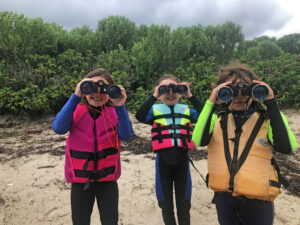
From a young age, I was getting dirty playing outside and exploring nature in my own backyard. I experimented by touching sticky pine sap. I explored ponds by flipping over rocks to find crayfish. I built sandcastles only for them to be washed away. There were no cellphones to Google what a lightning bug was. I simply caught them and watched them glow in my hands.
In my young adult life, I have realized my importance and potential impact on young females in STEAM. (Why STEAM and not STEM? Forbes discusses this idea.) Many times over, STEAM has been labeled or identified as “masculine” or for boys and men. Parents and teachers have been known to underestimate a girl’s ability to complete a complicated task or formulate a creative design that could work well. What these students sometimes need is more encouragement, more opportunities, and more professionals they can relate to and look up to. This is where I dive in as an Educator at NESS.
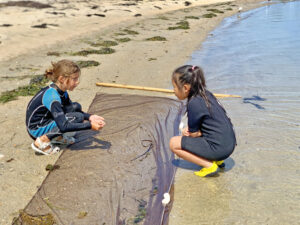
I have always loved the words why and how. Finding answers to most questions and problems starts there. Why does that crab have one claw? How does it survive with one claw? I was always striving to understand more, learn more. My parents encouraged me to explore and, often, tried to explore with me. I joined an environmental club starting in middle school and had opportunities to compete in state competitions. In high school, my best grades were in math, science, and musical arts (like band and choir). I would like to think this was because of the encouragement I had from my parents and teachers during those times.
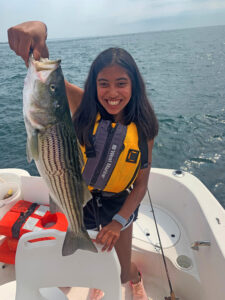
I believe, from an early age, we should be taught to explore and ask those questions. Every time a student asks “why?” I do my best to answer, even if I don’t know the answer myself. More recently, a student asked me “how do icebergs lose their salt?” I had to answer simply, “I don’t know right now.” It’s this type of honest communication and interaction that might fuel that one student to explore, build, or create something big or beautiful. I hope that student kept asking until they found their answer. I might never know if they did, but I know the answer now (hint: icebergs form on glaciers from snow and then eventually fall into the ocean).
Being a positive female role model to students has been one of my greatest honors so far. Teaching hands-on, experiential learning helps female students excel in social and emotional learning (SEL) skills like self-awareness, collaboration, and responsible decision making. I like to think if a young female saw me lift a heavy sailboat or catch a crab with big claws, they would be empowered to try it themselves. I try to show them that even if they are doubtful, they still have the ability to be strong, independent, and successful in what they set out to do.
